


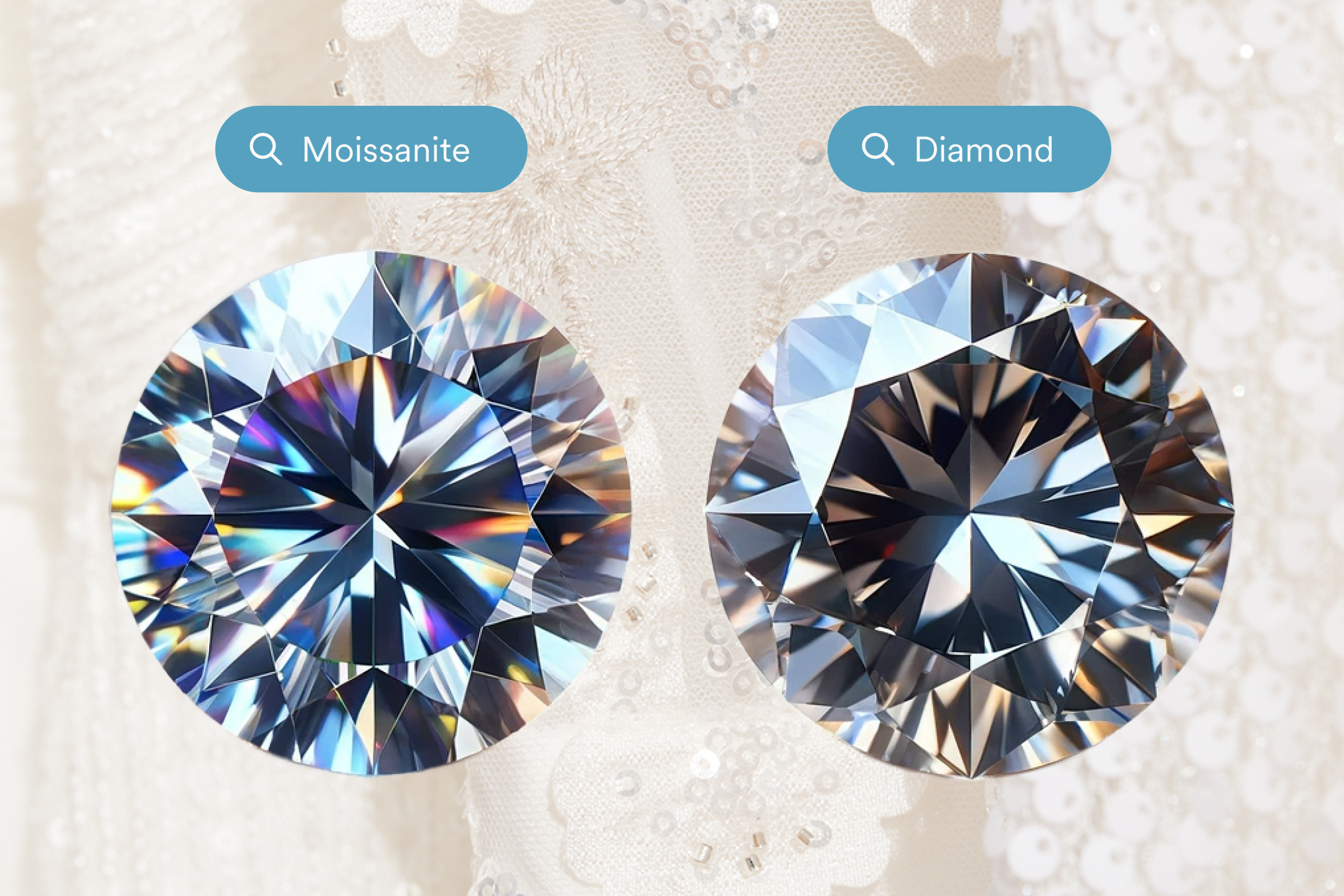
When shopping for fine jewelry, especially engagement rings, consumers today have more choices than ever before. Among the most debated topics is diamond vs moissanites—two gemstones that appear similar but differ greatly in origin, value, and properties. With the rise of lab diamonds, buyers are increasingly looking for options that reflect both beauty and conscience. Understanding the core differences between diamonds and moissanites is crucial to making the best choice for your lifestyle and values.
Table of Contents
What Are Diamonds and Moissanites?
To begin the diamond vs moissanites comparison, it’s important to understand what each gemstone truly is. Diamonds are composed of carbon atoms arranged in a crystal lattice structure, forming under extreme heat and pressure deep within the Earth. With modern technology, lab diamonds are now grown in controlled environments, offering the same chemical and physical characteristics as mined diamonds but with fewer environmental and ethical concerns.
Moissanite, by contrast, is made of silicon carbide. It was first discovered in a meteor crater by Henri Moissan in 1893, but natural moissanite is incredibly rare. Today, all moissanites are lab-created. Though it resembles a diamond in appearance, it is fundamentally a different gemstone with unique properties that impact its look, price, and wearability.
Appearance and Brilliance
One of the biggest questions in the diamond vs moissanites debate is which one looks better. Both stones are known for their sparkle, but their brilliance differs in quality and character. Diamonds, including lab diamonds, reflect light in a way that produces a combination of white light (brilliance), rainbow flashes (fire), and scintillation (sparkle during movement). Their beauty is often described as classic and elegant.
Moissanites, however, display more fire—meaning they produce more colorful rainbow flashes than diamonds. While some people love this enhanced sparkle, others find it too artificial or “disco-ball” like. Additionally, moissanite’s refractive index is higher than that of diamonds, which contributes to its distinctive light performance. In terms of clarity, moissanites generally come very clean, while diamonds vary based on quality and grading.
Durability and Daily Wear
Durability is another important factor in the diamond vs moissanites comparison. On the Mohs scale of hardness, diamonds score a perfect 10, making them the hardest known natural material. This exceptional hardness means diamonds are incredibly scratch-resistant and ideal for daily wear, particularly in engagement and wedding rings.
Moissanite ranks at 9.25 on the same scale, which still makes it a very durable stone, suitable for most types of jewelry. However, it’s slightly softer than diamonds and more prone to developing wear over time, especially if used in high-impact settings. That said, both stones are significantly harder than most other gemstones, so either is a long-lasting option.
Price and Value
One of the most noticeable differences in the diamond vs moissanites debate is the price. Moissanites are generally far more affordable than both mined and lab diamonds, often costing a fraction of the price. This makes them an appealing choice for budget-conscious buyers who want a big look without the high cost.
Lab diamonds offer a middle ground. While they are more expensive than moissanites, they cost significantly less than natural diamonds. The value proposition of lab diamonds lies in their ethical sourcing and authentic diamond composition, which appeals to buyers who want a true diamond but with modern values attached. Unlike moissanites, lab diamonds also tend to hold their value better over time, which is a consideration for long-term investments or heirloom pieces.
Ethical and Environmental Considerations
Ethics and sustainability are now key concerns for many consumers. This is another area where the diamond vs moissanites conversation becomes relevant. Moissanites are entirely lab-created, which means they are free from the ethical issues often associated with traditional mining. Similarly, lab diamonds are produced without the environmental degradation or human rights concerns linked to mined diamonds.
Both options appeal to eco-conscious buyers. However, lab diamonds offer the added benefit of being true diamonds, giving consumers a way to enjoy all the luxury of a diamond with none of the guilt. For those who prioritize ethics alongside authenticity, lab diamonds may be the more attractive option.
Conclusion
When it comes to diamond vs moissanites, the right choice depends on your priorities. If you value authenticity, long-term durability, and classic elegance, lab diamonds offer a compelling solution that bridges tradition and modernity. On the other hand, if your focus is on affordability and maximum sparkle, moissanites can deliver exceptional beauty at a fraction of the cost.
Both stones represent progress in the jewelry world, giving consumers the freedom to choose based on ethics, aesthetics, and budget. Whether you lean toward the timeless appeal of lab diamonds or the brilliant affordability of moissanites, you’re making a conscious decision—one that reflects your values as much as your style.